- Season: Season 1 (2025 H2)
- Funding: $433,400 worth represented in 392,000 cUSD + 138,000 CELO ($41,400 at an average of 0.3)
- Status: FINISHED
- Author(s): @ricaax @szapelao + all council members
TL;DR
During Season 1, the Celo Regional Council consolidated into a formal decentralised coordination layer, unifying all Regional HUBs under a single governance and funding framework. The Council operationalised a four-region model (Africa, Europe, LatAm, MENA/APAC), standardised metrics and reporting, and aligned regional execution tightly with Celo’s Season 1 Intents: TX growth, TVL growth, and sustainable builder onboarding.
Key achievements include improved proposal quality, stronger learner budgets, greater transparency and accountability, and coordinated high-impact initiatives, such as Celo Gather at DevConnect Argentina. Challenges remain around execution timelines, regional maturity asymmetries, and long-term sustainability, but Season 1 establishes a strong foundation for scalable, intent-driven decentralisation.
Note
This report covers the period from July 2025 to December 2025 and should be considered a living document. It reflects ongoing discussions, approved proposals, and governance decisions on the Celo Forum, as well as coordination work carried out across all Regional HUBs during Season 1.
It is also important to note that the Season 1 funding proposal was approved in mid-September 2025. As a result, most Regional HUBs received their H2 budget and began full execution from late September through December. From July through mid-September, HUBs continued to operate and deliver initiatives by making the most of the remaining H1 budget, while simultaneously focusing on planning, alignment, and proposal development for H2.
Goals, Metrics & KPIs (Proposed/Achieved)
| Region | Communities | Impact Proposed | Status |
|---|---|---|---|
| AFRICA | Nigeria, Kenya, Ghana, Uganda & South Africa | 500 Developers onboarded(KarmaGap) 50k+ transactions generated 10+ high-potential startups onboarded & maturing from the Incubator Program to Celo Camp 200+ on-chain apps/ active repos tracked via KarmaGAP 20 IRL Developer workshops(Codejams) 15+ MVPs integrating MiniPay 20 Miniapps onboarded 4 Hackathons tracked via HackersDAO | Achieved |
| MENA / APAC | Turkey, India, Vietnam, Indonesia, UAE | 650+ developers onboarded (i.e. actively participated in the programs) 250+ projects built, all tracked via KarmaGAP & Electric Capital 500k+ impressions generated | Achieved |
| EUROPE | Estonia, Poland, Romania, Serbia, Finland | 250+ developers onboarded (actively participated in programs) 25+ projects built (tracked via KarmaGAP & Electric Capital) 150k+ impressions generated, 3+ high-quality projects/startups funnelled into Celo programs 5+ ambassadors activated in the region 10+ MCP-compatible apps deployed with open-source repos | Partially Achieved |
| LATAM | Argentina, Brazil, Colombia, Mexico | 150+ developers via workshops, sprints, and incentive campaigns, 150,000+ TVL onboarded into LP and Staking programs. 65+ Smart Contract deployed, 30+ active projects tracked on KarmaGAP & GitHub 35+ deployed dApps or protocol integrations, tracked via Karma GAP 10+ Merchants activated using stablecoins, 10+ Contributor/Ambassadors onboarded. | Achieved |
3+ high-quality projects/startups funnelled into Celo programs 5+ ambassadors activated in the region 10+ MCP-compatible apps deployed with open-source repos|Partially Achieved|
|LATAM|Argentina, Brazil, Colombia, Mexico|150+ developers via workshops, sprints, and incentive campaigns, 150,000+ TVL onboarded into LP and Staking programs. 65+ Smart Contract deployed, 30+ active projects tracked on KarmaGAP & GitHub 35+ deployed dApps or protocol integrations, tracked via Karma GAP 10+ Merchants activated using stablecoins, 10+ Contributor/Ambassadors onboarded.|Achieved|
Budgets/ Expenses
Season 1 funding followed a structured process:
- Regional proposal drafting and feedback rounds
- Alignment checks against Season 1 Intents
- Budget calibration to maximise impact and reduce overhead
- Community vote on a single consolidated proposal
Total Approved Budget: $433,400 (392,000 cUSD + 138,000 CELO at 0.3 USD/CELO)
Regional Council Operations Budget (Season 1)
To support Council-level execution (coordination, governance, and reporting), the Season 1 proposal included a dedicated operations allocation:
Approved Ops Budget
- Core Ops (coordination, reporting, governance): 10,000 cUSD
- Rewards, ops, and buffer: 50,000 CELO (This will be allocated by delegating to Regional HUBs delegates’ profiles)
Ops Spend to Date (cUSD)
- Council Coordination Tasks (coordination, communication, treasury management): 3,400 cUSD + 1,400 planned to be executed in Dec
- Additional ops support for Celo Gather: 1,286 cUSD
- Total spent (cUSD): 4,686 cUSD + 1,400 planned to be executed in Dec
- Remaining Core Ops (cUSD): 3,014 cUSD (1,400 planned to be executed in Dec)
As noted above, because approval was granted in late September 2025, most H2 execution occurred from October through December.
Hub Budgets
- Celo Africa: 102,000 cUSD | Fully deployed
- Europe HUB: 80,000 cUSD + 34,000 Celo | Fully deployed
- Latam HUBs: 117.000 cUSD + 20.000 Celo | Partially deployed
- MENA/APAC HUBs: 83,000 $cUSD + 34,000 Celo | Fully deployed
See more information about budget allocation by each hub in their dedicated H2 reports:
Details
0. Methodology & Source of Insights
This report is grounded in six months of hands-on coordination of the Celo Regional Council during Season 1. It synthesises insights from:
- Weekly ecosystem-wide coordination calls
- 1:1 conversations with Regional HUB leaders and local node operators
- Live proposal presentations, revisions, and budget review cycles
- Strategic alignment meetings with Celo Foundation teams (DevRel, Marketing, Governance), Prezenti, CPG, and other ecosystem actors
Reference Documents
This report builds on internal and public working documents produced during the period, including:
- Celo Regional Council — H1 2025 Report
- Regional Council Season 1 Funding Proposal (Approved)
- Regional HUB Proposals (Africa, Europe, LatAm, MENA/APAC)
- RC Season 1 Metrics & KPIs
These materials form the analytical and strategic foundation for the reflections and roadmap presented below.
1. Starting Point: What Changed Since H1/ Season 0
Season 1 began with strong regional momentum and growing legitimacy of the Council model, but with clear needs carried over from earlier phases: consistent reporting, comparable budgets, and better attribution of regional work to ecosystem-wide Intents.
Season 1’s “step-change” versus H1/Season 0 was the operationalisation of a unified framework: a consolidated funding and review process, clearer regional responsibilities, and a shared expectation that regional execution should map explicitly to TX growth, TVL growth, and sustained builder onboarding—supported by common tooling.
2. Operating Model: Regional HUBs & Local Nodes
Reference Model
During Season 1, the Council formalised a four-region operating model:
- Africa
- Europe
- Latin America (Latam HUBs Coalition)
- MENA / APAC
Each macro-region aggregates local HUBs and nodes, while retaining internal governance and reporting structures. The Council operates as a coordination and alignment layer, not a top-down manager.
Regional Outlook
- Africa: Highest adoption maturity; strong execution capacity; continued focus on MiniPay, stablecoins, and developer funnels.
- Europe: Strong governance and technical depth; emphasis on MCP-compatible apps, protocol integrations, and public-sector adjacencies.
- LatAm: High momentum and coordination capacity; leadership on cross-regional initiatives such as Celo Gather at Devconnect Argentina and Latam Buildathon by the Latam HUBs Coalition.
- MENA/APAC: Rapid scale potential; consolidation under Rise In improved coherence and execution velocity.
Responsibilities & Flow
- Regional HUBs execute local programs and activations.
- Metrics and reporting flow upward via shared tooling.
- The Council ensures alignment with ecosystem Intents.
- Budgets are allocated through transparent, milestone-driven processes.
Sustainability Considerations
While all regions remain dependent on Community Fund support, Season 1 strengthened the link between TX/TVL growth and long-term ecosystem sustainability, reinforcing the importance of measurable on-chain outcomes.
Regional Council Team
- Africa
- Celo Africa: Brisa (@0xBrisa)
- Europe
- Celo EU: Rica (@ricaax)
- Latin America
- CeLatam: Susanne (@szapelao)
- Celo Colombia: Ximena (@Ximemonclou)
- Celo Mexico: Gerry (@GerryAlvrz)
- Asia – MENA/APAC
- Gulcan (@gulcanyayla)
- Celo Governance/ Community Guilds: 0xj4an Work (@0xj4an-work)
- Council-Led Initiatives & Cross-Regional Execution
Beyond regional programs, Season 1 included Council-level initiatives where cross-region coordination was the primary value-add:
3.1 Consolidated Proposal & Budget Review Cycles
The Council coordinated shared proposal development, iteration loops, and budget calibration across regions, improving comparability, reducing duplication, and raising the overall quality of submissions presented to governance.
3.2 Metrics Standardisation & Reporting Expectations
Season 1 advanced a shared reporting baseline anchored in:
- Intent alignment (TX growth, TVL growth, sustainable builder onboarding)
- Consistent usage of tools like KarmaGAP, GitHub, and dashboards
- Clearer regional KPIs and milestone definitions
3.3 Global ↔ Local Alignment Facilitation
The Council served as the translation layer between ecosystem-wide priorities (Foundation teams, core programs, governance rhythms) and local realities, surfacing grassroots constraints upward and local opportunities into global program pipelines.
3.4 Flagship Cross-Regional Activation: Celo Gather at Devconnect Argentina
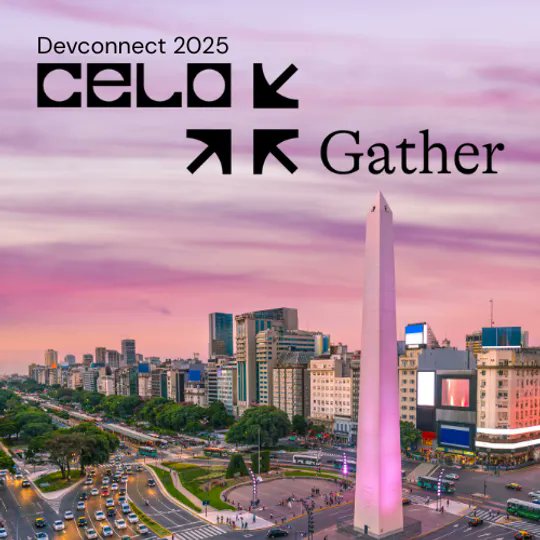
The first Celo Gather in Latin America was hosted in Buenos Aires on November 18, during Devconnect, and represented a high-visibility example of cross-regional coordination, where the Council helped align planning, resourcing, and execution across stakeholders and regions, supporting a shared narrative, coordination leverage, and reinforcing the Council’s role as an enabling layer for high-impact ecosystem moments.


3.5 Communication & Transparency
To strengthen transparency, accountability, and community proximity, the Council also prioritised consistent, public-facing communication throughout Season 1. This included ongoing content and updates shared via X and the Celo Forum, with two main goals: (1) increasing visibility into what Regional HUBs were executing on the ground, and (2) improving community context around proposals, budgets, timelines, and reporting.
Key activities included:
- Forum-based governance communication: Recurring follow-up posts reporting updates and progress to enhance visibility and reduce information gaps between voting and execution.
- Public updates and ecosystem storytelling on X: amplifying Regional HUB activities, surfacing cross-regional moments, and making Council coordination more legible to the broader community.
- Transparency-by-default habits: using public threads, links, and references to make regional work easier to audit, understand, and support.
These communication efforts helped the Council move closer to the community by making regional execution more visible, improving the feedback loop with governance participants, and reinforcing the Council’s role as an enabling layer rather than a closed coordination group.
4. Council Evolution & Governance Role
Season 1 marked the transition from:
- Ad-hoc coordination → formalised coordination layer
- Fragmented proposals → consolidated funding framework
- Informal reporting → standardised metrics expectations
By aligning funding, reporting, and execution around Intents, the Council helped:
- Improve builder continuity and retention pathways
- Increase transparency and accountability through shared tooling
- Professionalise decentralised coordination without over-centralising local execution
Validated processes now include shared budget frameworks, common reporting structures, and cross-regional review and alignment cycles.
Closing remarks
Season 1 made something concrete that had previously existed mainly as an ambition: a Regional Council that functions as a robust coordination infrastructure rather than a loose set of parallel efforts. The shift to a consolidated funding proposal and shared review cycles reduced fragmentation and made regional work easier to compare, challenge, and improve. More importantly, tying evaluation to Season Intents pushed regions to move beyond activity lists and into clearer thinking about what actually drives TX growth, TVL growth, and sustained builder onboarding.
At the same time, Season 1 clarified that decentralised coordination only scales when trust is legible. Shared tooling such as KarmaGAP, GitHub, and public dashboards began to operate less like “reporting requirements” and more like a common ground for contributors, voters, and ecosystem partners to see what is happening, attribute outcomes, and stay aligned without relying on private context. That said, tooling and process can’t fully compensate for the constraints that still shape execution. Timelines remain the main bottleneck, constrained by operational bandwidth, local dependencies, and funding cycles. Regional maturity differences remain significant, so the next iteration needs to support regions differently without breaking the shared framework.
If Season 1 was about consolidating the model, the following season needs to prove its durability. That means tightening execution cycles, making sustainability pathways more credible beyond grants, deepening the collaboration loop with Celo Foundation teams, and turning the best regional and cross-regional initiatives into repeatable patterns that can travel across markets. The opportunity ahead is not just to “run more programs,” but to keep strengthening a coordination layer that preserves local autonomy while making impact more visible, more measurable, and easier for the broader community to trust and support