With governance proposal #271 passing recently, it feels like the right time to reflect on the change. That proposal took an unexpected turn in the 11th hour. Honestly, I assumed the community would go with lowering the validator size first, and so I haven’t fully wrapped my head around all of the implications. While the outcome saves the ecosystem a big chunk of cost, it’s clear that it has some negative consequences as well, and I wanted to create space for brainstorming ways we can mitigate them. The change also clearly marks the end of an era, and it deserves a moment of reflection and gratitude.
Where do we go from here?
With the way the governance proposal went (our first multiple-choice proposal!), rewards continue to stakers but validators have stopped receiving validator payments. Stakers will receive rewards if they vote for an existing validator group, so long as the group is elected. This means that if validators decide to stay registered and remain elected, governance can choose to re-enable validator rewards at any point in the future, effectively enabling the community to re-activate the role of validators without necessarily rebuilding the network effects that go with everyone picking validators they trust.
That said, the current status quo doesn’t give validators much incentive to stick around. Reflecting on this, perhaps a good direction to explore would be adding a commission field, where stakers can share a portion of their rewards with validators, similar to how Proof of Stake works in Cosmos.
I also wanted to acknowledge that some validators chose to reinvest a meaningful portion of their rewards directly back into the Celo ecosystem. They supported apps, infrastructure, public goods, and local communities aligned with Celo’s mission. That kind of commitment goes beyond running nodes. It reflects real care for the health and future of what we’re building together.
I personally don’t want that kind of reinvestment and stewardship to disappear. I’d love to work with folks here to identify funding mechanisms that can continue supporting these efforts, potentially through ongoing grants from the Community Fund. If you’ve been doing this kind of work, or have ideas for how to structure it sustainably and transparently, I want to hear from you!
Thank You 
I also wanted to take a moment to say thank you to all the validators who have served the Celo community over the years. Many of you believed in Celo before there was a mainnet, before there was certainty, and before there was traction. You showed up early, ran infrastructure, participated in governance, and helped secure the network through its most formative years. You were there as we experimented, iterated, and learned what it meant to build a payments-focused blockchain targeting not a casino, but real-world use cases.
Many of you also played a critical role in helping Celo navigate one of the most significant transitions in our history: the move from an L1 to an L2. That transition was technically against your personal interests, and yet you showed up and helped with the technical work, performed huge changes to your infrastructure, and helped with countless dry runs. The work was completely invisible to many people, and so I wanted to highlight it here. In many ways, you helped make the hardfork possible.
And so, I wanted to end on a personal note by saying thank you! Thank you for your time, your energy, your belief, and your service. Celo wouldn’t be what it is today without the validators who helped carry it from an idea into a living ecosystem. Even as roles change, the respect and gratitude remain.
Here’s to you all! 
Marek
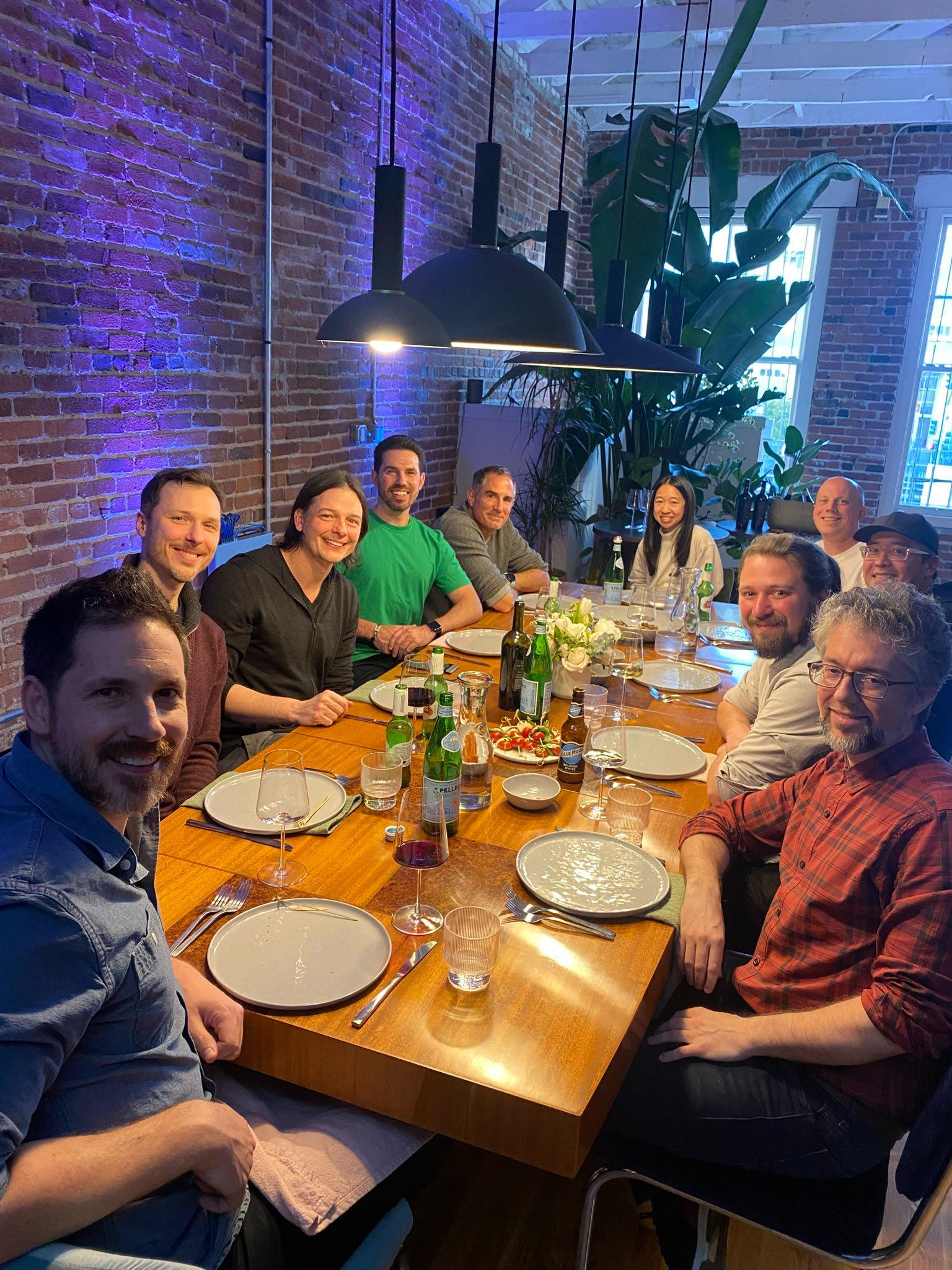
PS Here are some pics I found of some of our validator community: